Mars 3 (Orbiter)
The USSR's Mars 3 mission (1971) was a historic partial success. Its orbiter functioned, but the lander, despite achieving the first-ever soft landing on Mars, only transmitted for 20 seconds. A massive global dust storm is believed to have caused the failure.
Agency

Country

Type
Orbiter
Status
Launch
May 28, 1971
Technical Analysis of the Mars 3 Mission
- Mission Designation: Mars 3
- Operating Agency: USSR Academy of Sciences
- Launch Date: May 28, 1971
- Launch Vehicle: Proton-K/D
- Launch Site: Baikonur Cosmodrome
1. Mission Objectives
The Mars 3 mission, along with its twin Mars 2, represented the Soviet Union's most ambitious planetary exploration attempt to date. The objectives were twofold:
Primary:
- To achieve the first successful orbital insertion at Mars (in direct competition with NASA's Mariner 8 and 9 missions).
- To accomplish the first-ever soft landing on the surface of Mars.
- To deploy the first rover vehicle (Prop-M) on another planet.
Scientific:
- To gather orbital data on the atmosphere, topography, and composition of Mars.
- To transmit images and meteorological data from the surface.
- To obtain images of the surface during descent.
2. Probe Specifications
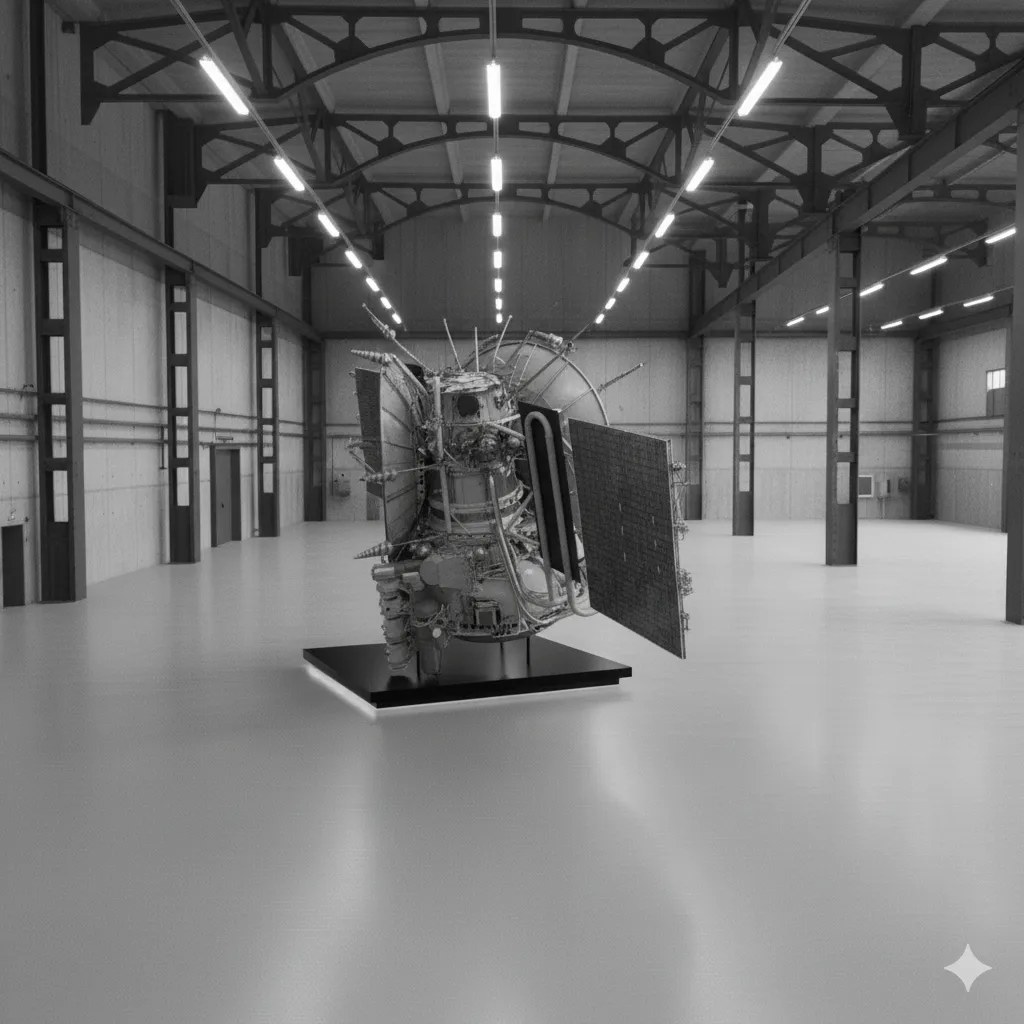
The spacecraft was a combined design consisting of an orbiter and an attached lander module.
- Architecture: The complete craft was a combined orbiter and lander. The lander was mounted on top of the orbiter for the interplanetary journey.
- Orbiter: Acted as a communications relay for the lander and carried its own suite of scientific instruments for orbital study.
- Lander Module: A spherical descent module containing a heat shield, parachute, and retro-rockets for the soft landing.
- Rover (Prop-M): The probe also carried a small 4.5 kg rover, designed to "walk" on skis while connected to the lander by a 15-meter cable.
3. Scientific Instrumentation
The instrument package was divided between the orbiter and the lander.
Orbiter:
- Imaging Systems: Two cameras (wide-angle and narrow-angle) which, combined with Mars 2, returned a total of 60 images.
- Atmospheric Instruments: Photometer, UV/IR spectrometer, and radiometer to study atmospheric composition and temperature.
- Magnetometer: To measure the Martian magnetic field.
Lander Module:
- Imaging System: A television camera designed to capture a panorama of the surface.
- Weather Station: Sensors to measure temperature, pressure, and wind speed.
- Mass Spectrometer: To analyze atmospheric composition during descent.
- Prop-M Rover: Equipped with a dynamic penetrometer and a gamma-ray densitometer.
4. Launch Vehicle
The mission used the heavy-lift Soviet Proton-K/D launcher. This 4-stage rocket (including the Blok-D escape stage) was necessary to inject the massive spacecraft onto a trans-Mars trajectory.
5. Mission Result Analysis (Partial Success)
The Mars 3 mission achieved historic milestones but was severely compromised by a natural phenomenon.
- Mars Arrival: The spacecraft arrived at Mars on December 2, 1971, after NASA's Mariner 9, which had become the first artificial orbiter of Mars a few weeks prior.
- Environmental Event: Both spacecraft (Mars 3 and Mariner 9) arrived in the midst of the largest global dust storm ever recorded on Mars, which obscured the entire planet.
- Orbiter Performance: The Mars 3 orbiter successfully entered Martian orbit. Although the scientific utility of its 60 images (jointly with Mars 2) was limited by the storm, the orbiter completed 20 orbits and continued to successfully transmit atmospheric and surface data. Operations ceased and contact was lost in March 1972.
- Landing Milestone: Despite the storm, the lander separated and executed its descent sequence, achieving the first successful soft landing in the history of Mars.
- Surface Failure: The lander began transmitting data back to Earth and transmitted one partial, grainy image. However, all communication abruptly ceased after only 20 seconds.
6. Technical Conclusion and Cause of Failure
Mars 3 is remembered as a monumental "partial success." It achieved its most difficult engineering goal: the first soft landing on another planet. However, its scientific surface mission was a total failure.
The root cause of the lander's 20-second failure has never been confirmed, but the leading hypothesis is that the massive dust storm (exceeding design specifications) damaged the communications system immediately upon landing. The orbiter, however, successfully completed its extended mission.
Mission Milestones
Launch
Sol 14 of Nilo, Year 9
188 days
of travel
Arrival at Mars
Sol 11 of Tharso, Year 9
Operations Start
Sol 11 of Tharso, Year 9
256 sols
of operations