Mars Pathfinder
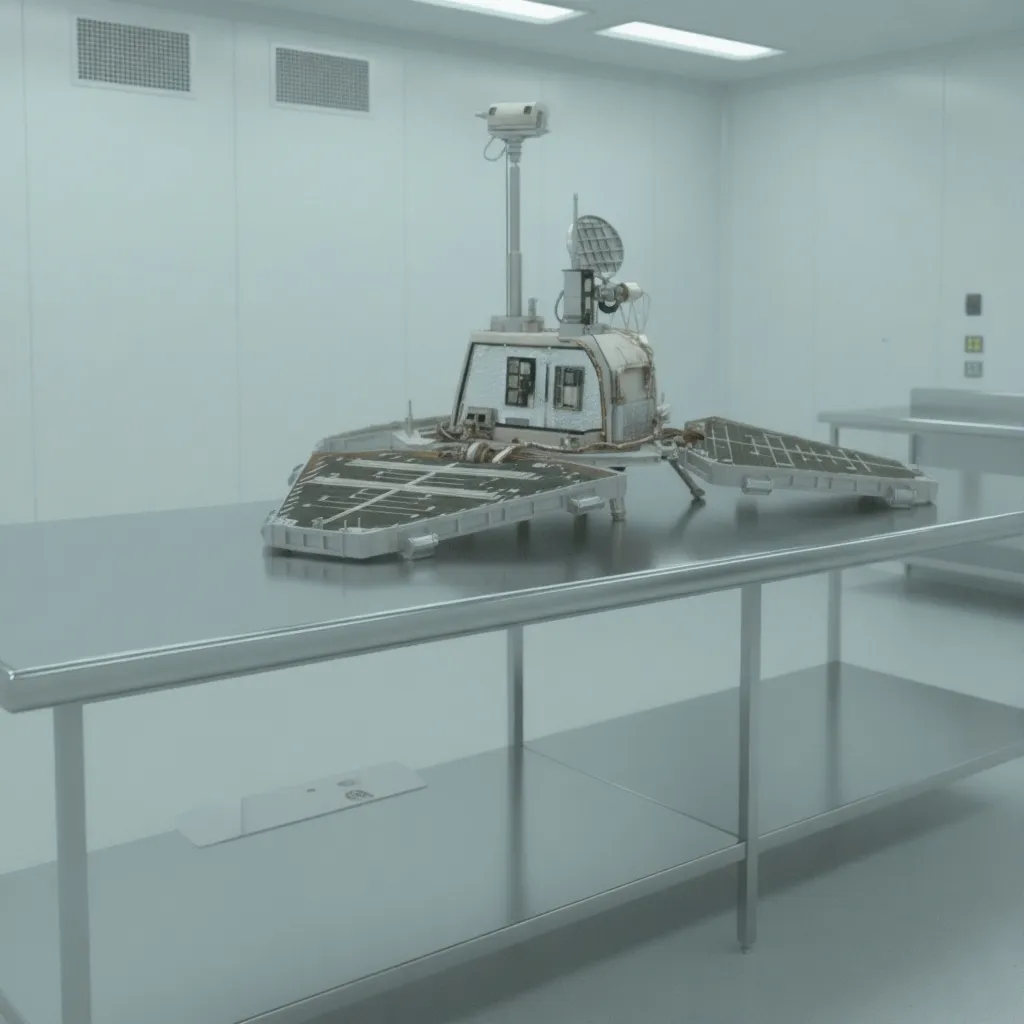
Launched in 1996, Mars Pathfinder was the first completed mission under NASA's "faster, better, cheaper" philosophy. It pioneered the use of an airbag landing system and successfully deployed the first rover on Mars, Sojourner. The mission landed in Ares Vallis, returned over 17,000 images, and performed in-situ chemical analysis of rocks and soil, far exceeding its expected operational lifespan.
Agency

Country

Type
Lander
Status
Launch
December 4, 1996
Technical Analysis of the Mars Pathfinder Mission (Discovery 1)
- Mission Designation: Mars Pathfinder (MESUR Pathfinder)
- Payload: Lander (Carl Sagan Memorial Station) and Rover (Sojourner)
- Operating Agency: NASA / Jet Propulsion Laboratory (JPL)
- Launch Date: December 4, 1996
- Landing Date: July 4, 1997
- Launch Vehicle: McDonnell Douglas Delta II 7925
- Launch Site: Cape Canaveral, Complex 17B
- Landing Site: Ares Vallis (19.13°N, 33.22°W)
1. Mission Objectives
Mars Pathfinder was primarily a technology demonstration mission ("Proof of Concept") designed to validate a new low-cost planetary exploration architecture. Its main objectives were:
Engineering and Technology:
- Demonstrate the "Faster, Better, Cheaper" philosophy.
- Validate a passive entry, descent, and landing (EDL) system using parachutes and a novel impact attenuation system utilizing airbags.
- Operate the first microrover (Sojourner) on the surface of Mars to test robotic mobility and basic autonomous navigation.
Scientific:
- Obtain surface images to characterize local geology and morphology.
- Analyze the elemental composition of rocks and surface soil.
- Study atmospheric dynamics, including pressure, temperature, and winds.
2. Probe and Rover Specifications
The mission architecture was divided into three main components: the cruise stage, the entry system, and the lander with the rover.
- Total Launch Mass: 890 kg (including propellant).
- Lander: A 370 kg tetrahedral structure. Upon impact, three metal petals opened to expose solar panels and upright the spacecraft. It acted as a base station and communications relay for the rover.
- Sojourner Rover: A 6-wheeled vehicle weighing 10.6 kg. It employed a "rocker-bogie" suspension system that allowed it to traverse obstacles and remain stable. It was powered by a 0.2 m² solar panel and primary lithium batteries.
3. Scientific Instrumentation
Although the focus was engineering, the scientific payload was highly effective:
- Imager for Mars Pathfinder (IMP): A multispectral stereo camera on the lander. It provided color panoramas, studied atmospheric opacity, and magnetic properties of dust using magnetic targets.
- Atmospheric Structure Investigation/Meteorology (ASI/MET): Sensors on the lander that recorded data during descent and operated on the surface, detecting pressure drops associated with "dust devils."
- Alpha Proton X-ray Spectrometer (APXS): Mounted on the Sojourner rover. This instrument allowed for the determination of the chemical composition of rocks and soil. It analyzed specific rocks such as "Barnacle Bill" and "Yogi."
4. Launch Vehicle and Mission Profile
The mission utilized a Delta II 7925 rocket. The flight profile introduced a direct entry trajectory:
- Direct Entry: The probe entered the atmosphere directly without orbiting first.
- Descent: Initial braking by heat shield, followed by supersonic parachute deployment.
- Airbag Landing: A radar altimeter triggered solid retrorockets (RAD) to halt vertical descent. Seconds before impact, large airbags inflated around the lander. The spacecraft bounced at least 15 times on the surface of Ares Vallis before coming to a rest.
5. Mission Results
Mars Pathfinder was a resounding success. It landed on July 4, 1997. The rover descended from the lander two days later.
- Returned Data: Over 17,000 images (including 550 from the rover) and 15 chemical analyses of rocks.
- Geological Findings: APXS data showed local rocks were silica-rich (similar to terrestrial andesites), indicating a more complex volcanic history than known Martian meteorites. Images confirmed the site was an ancient catastrophic flood plain.
- Duration: The mission far exceeded its design life (30 days for the lander, 7 for the rover), operating until September 27, 1997.
6. Technical Conclusion
The Mars Pathfinder mission revitalized global interest in Mars following the failure of the Mars Observer. It conclusively demonstrated that high-value scientific interplanetary exploration is possible with reduced budgets. The validation of the airbag system and rover mobility laid the direct groundwork for the successful Mars Exploration Rovers (Spirit and Opportunity) mission in 2003.
Mission Milestones
Launch
Sol 23 of Deimo, Year 23
212 days
of travel
Arrival at Mars
Sol 6 of Luno, Year 23
Operations Start
Sol 6 of Luno, Year 23
82 sols
of operations